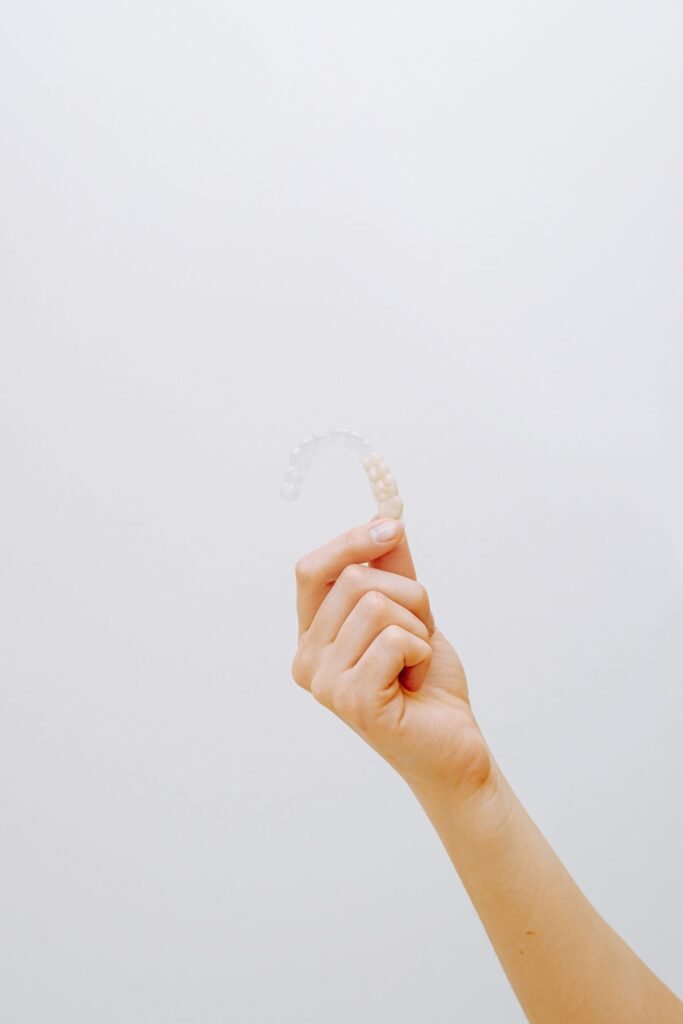
Yes, clear aligners can correct most mild to moderate overbites, especially when the cause is tooth position rather than jaw size. Modern clear aligners use small tooth-coloured attachments, bite ramps and elastics to open a deep bite or bring the lower jaw forward. A small overbite is normal and healthy. A deep or severe overbite is common too, and it’s worth treating when it causes gum damage, tooth wear or jaw strain. Very severe skeletal cases may need braces, growth appliances or jaw surgery.
A lot of people use “overbite” to mean two different things. One is how far the upper front teeth cover the lower ones vertically (deep bite). The other is how far the upper teeth sit in front of the lower ones (overjet, or “buck teeth”). Aligners handle both, with different techniques.
The right answer for you depends on the measurements, your age and whether your jaws are still growing. A careful exam as part of your preventive dentistry visits can spot a deepening bite early, sometimes before you notice it in the mirror.
For children and young teens, timing matters even more. Growing jaws can be guided, which is why pediatric dentistry checkups around age 7 include a look at how the bite is developing.
Some adults also have worn or chipped front teeth from years of a deep bite. Once the bite is corrected, those edges can be restored with bonding or dental veneers so the smile looks balanced. To see how the team plans this kind of care, you can read more about Dara Dental Clinic.
What is an overbite?
An overbite is the vertical overlap of the upper front teeth over the lower front teeth when you bite together. A small overlap of about 2 to 3 mm, roughly 10% to 30% of the lower teeth, is considered normal.
| Type | What it looks like | Normal or not |
|---|---|---|
| Normal overbite | Upper teeth cover about a quarter of the lower front teeth | Healthy |
| Deep bite | Upper teeth cover most or all of the lower teeth; lower teeth may bite into the palate | Usually needs treatment |
| Large overjet | Upper teeth stick out well in front of the lower teeth | Often treated, especially in kids (injury risk) |
| Skeletal Class II | Lower jaw sits too far back relative to the upper jaw | May need growth modification or surgery |
What causes an overbite?
- Genetics. Jaw size and shape run in families.
- Tooth position. Upper teeth tipped forward or lower teeth tipped back.
- Childhood habits. Prolonged thumb sucking or pacifier use past age 3 to 4.
- Tongue thrusting against the front teeth.
- Missing back teeth that let the bite collapse and deepen over time.
- Crowding in the lower front teeth.
- Grinding and wear that shortens back teeth.
Why treat an overbite at all?
For many people it starts as a looks question. The health reasons can matter more.
How do clear aligners fix an overbite?
Each set of aligners moves teeth a small amount, usually about 0.25 mm per stage. For overbites, the plan combines several tools.
Attachments
Small, tooth-coloured bumps bonded to certain teeth give the aligner something to grip, so it can push teeth up, down or rotate them precisely.
Intrusion and extrusion
Front teeth can be gently moved up into the bone (intrusion) while back teeth are allowed to erupt slightly, opening a deep bite.
Bite ramps
Small ramps built into the upper aligner behind the front teeth stop the back teeth from fully meeting, which helps the bite open.
Elastics
Small rubber bands attached between upper and lower aligners pull the lower teeth forward and upper teeth back to reduce overjet.
Mandibular advancement features
For some growing teens, aligners can include wings that hold the lower jaw forward, encouraging growth while straightening teeth at the same time.
Clear aligners vs braces for an overbite
| Feature | Clear aligners | Braces |
|---|---|---|
| Best for | Mild to moderate deep bites and overjet | Moderate to severe cases, complex root movement |
| Appearance | Nearly invisible | Visible brackets (ceramic options available) |
| Eating | Remove to eat anything | Avoid hard and sticky foods |
| Cleaning | Brush and floss normally | More effort around brackets |
| Compliance needed | High: 20 to 22 hours a day | Low: fixed in place |
| Typical time | 12 to 24 months | 18 to 30 months |
| Office visits | Every 6 to 10 weeks | Every 4 to 8 weeks |
For most adult overbites that come from tooth position, aligners work very well. When the jaw itself is the main problem in an adult, aligners can camouflage it to some degree, but surgery may be needed for a full correction.
Who is a good candidate?
- Adults and teens with mild to moderate deep bite or overjet
- People whose overbite is mainly from tooth position
- Patients who will wear aligners 20 to 22 hours a day and use elastics as directed
- Healthy gums and no untreated cavities
Who may need a different approach?
- Severe skeletal overbites in adults
- Large jaw size differences
- Very short teeth with little to grip
- Active gum disease (must be treated first)
- Patients who can’t commit to wearing aligners consistently
What does treatment look like step by step?
- Consultation. A conversation about your goals and any concerns about speech, comfort or appearance.
- Records. A 3D intraoral scan, photos and X-rays. No messy impressions.
- Digital plan. You see a simulation of how your teeth and bite should move, stage by stage.
- Attachments. Tiny tooth-coloured bumps are bonded to selected teeth. Painless, no drilling.
- Aligner sets. You switch to a new set every 1 to 2 weeks.
- Elastics, if needed. Worn between upper and lower aligners for overjet correction.
- Progress checks. Visits every 6 to 10 weeks to confirm tracking.
- Refinements. Extra aligners to fine-tune the bite, which is common and expected.
- Retainers. Worn every night long term to hold the result.
Do clear aligners hurt?
Most people feel pressure for 1 to 2 days each time they switch to a new set. It’s a dull ache, and many describe it as a sign the aligners are working. Elastics can add some soreness for the first few days.
A common myth is that aligners are always painful or that braces are always worse. In reality, both cause temporary tenderness. Aligners tend to cause fewer mouth sores because there are no wires or brackets.
Myths about overbites and aligners
- “Aligners only work for small cosmetic changes.” Today’s systems with attachments and elastics handle many bite problems.
- “An overbite will correct itself as you get older.” Deep bites often get deeper with age as teeth wear and shift.
- “Adults are too old for bite correction.” Healthy teeth can be moved at any age.
- “Once straight, always straight.” Without retainers, teeth tend to drift back.
Real-life examples
Common mistakes
- Not wearing aligners the full 20 to 22 hours a day
- Skipping elastics, which are often essential for overbites
- Stopping retainer wear after treatment
- Choosing at-home kits for a bite problem
- Drinking anything other than water with aligners in
How to get the best result
- Wear aligners consistently and track your hours.
- Use “chewies” (soft foam cylinders) to seat aligners fully.
- Brush before putting aligners back in.
- Clean aligners daily with cool water and a soft brush.
- Keep regular cleanings and checkups during treatment.
- Wear retainers every night once you’re done.
What does daily life with aligners look like?
Most people settle into a routine within the first 2 weeks. Here’s what a typical day involves.
- Morning: remove aligners, brush, eat breakfast, brush again, put aligners back in.
- Daytime: water only while aligners are in. Take them out for meals and coffee.
- Elastics: if prescribed, swap in fresh ones after each meal.
- Evening: brush and floss before bed, clean the aligners, put them back in.
- Every 1 to 2 weeks: switch to the next set, ideally at bedtime.
Speech can sound slightly different for the first day or two, mostly with “s” sounds. It passes quickly as your tongue adjusts.
Can an overbite be fixed at the same time as crowding?
Yes, and it usually is. Crowded lower front teeth often contribute to a deep bite, because they tip backward and let the upper teeth close down further. Straightening and slightly levelling them is part of opening the bite. A single digital plan handles crowding, spacing and bite at once, so you’re not doing treatment in stages.
Where can you get an overbite assessment in Thornhill?
Dara Dental Clinic is a modern dental clinic in Thornhill offering unhurried, warm and refined care that combines craftsmanship with quiet hospitality. Every plan is personalized, and the welcoming, sophisticated environment makes longer treatments like aligners feel easy to stick with.
The clinic offers clear aligners Thornhill patients trust, alongside preventive dentistry (cleanings, exams and fillings), teeth whitening, dental implants, pediatric dentistry and dental veneers. Advanced technology like 3D scanning and digital treatment previews supports comfortable, precise care for patients of all ages in Thornhill and nearby communities.
Call 647-699-9485, email info@daradentalclinic.ca, or visit Suite 116, 8188 Yonge Street, Vaughan, Ontario L4J 0M2. Booking online through https://daradentalclinic.ca/ is easy, and the team responds promptly to questions.
Frequently asked questions
Can Invisalign fix a deep bite?
Yes. Clear aligners can open many mild to moderate deep bites using attachments, bite ramps and controlled tooth movement.
How long does it take to fix an overbite with aligners?
Most cases take 12 to 24 months, depending on severity, age and how consistently aligners and elastics are worn.
Do I need rubber bands with clear aligners for an overbite?
Often, yes, especially to reduce overjet. Elastics help move the upper and lower teeth into a better relationship.
Can an adult overbite be fixed without surgery?
Many can, when the cause is tooth position. Severe skeletal overbites in adults may need surgery for a full correction.
Will my overbite come back after treatment?
It can if retainers aren’t worn. Nightly retainer wear keeps teeth and bite stable long term.
Conclusion
Clear aligners can correct most mild to moderate overbites, particularly those caused by tooth position.
Attachments, bite ramps and elastics make modern aligners far more capable than many people expect.
An in-person assessment will show whether aligners, braces or another approach suits your bite best.